
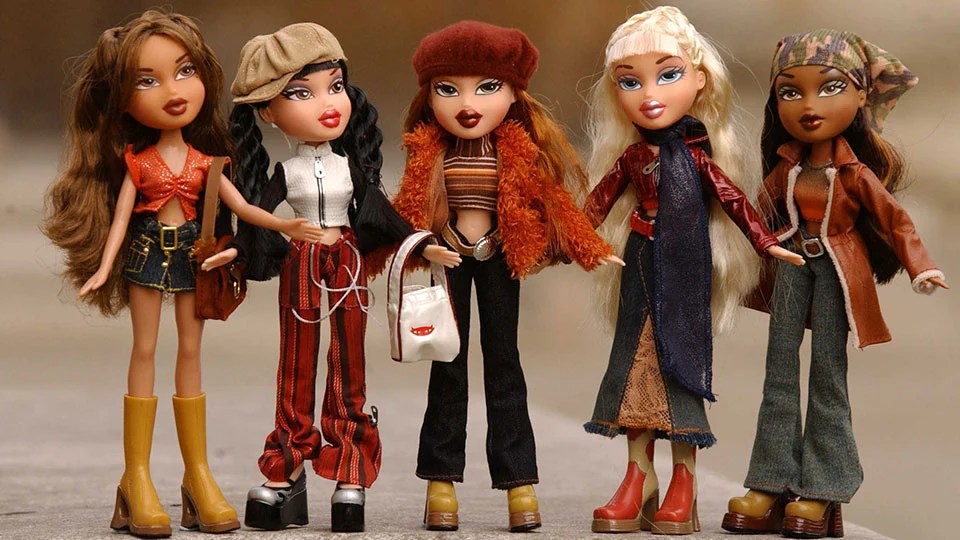
Barbie. The perfect woman.
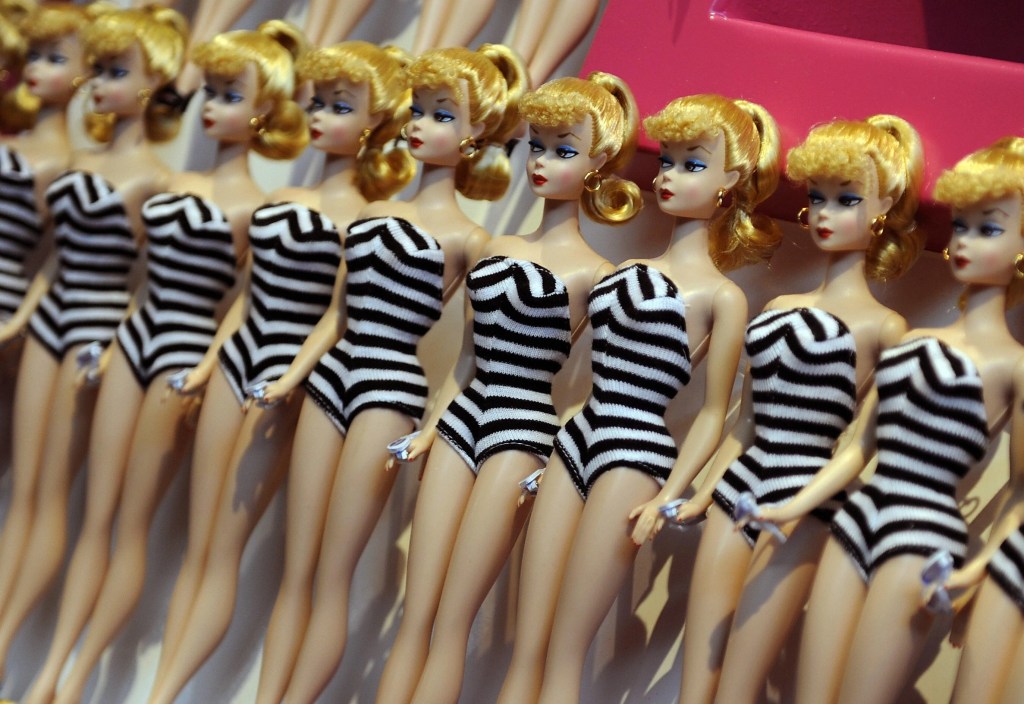
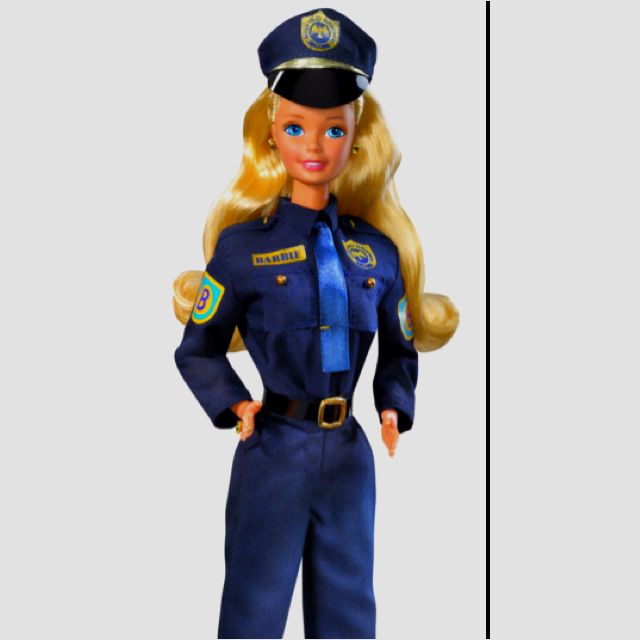
She’s just your tall, lean, big booby girl next door. With her tanned but not too tanned white skin and flowing blonde locks, there isn’t any woman in the world who wouldn’t want to look like Miss Barbara Jean, right? She’s not just a picture of perfect looks however. With her undying commitment to capitalism she’s a great role model for little girls across the globe to get their ass up and work over 200 careers at any one time.
Despite the hyperbole, this presents a problem. Not many of us do look or act like Barbie. Even less of us could look or act like barbie. In fact, I’m sure many of us are familiar with a certain info-graphic detailing how it’s actually impossible for a human being to be like barbie. Both physically and mentally, Barbie represents a distinctly American and unattainable ideal for any child who plays with her. But, she’s their lifelong friend and teacher too, and has been since the 1950s. She’s also a hunk of plastic dressed in pink frills that’s been assembled in a sweat shop. Above it all, however, she is inarguably an icon.
But, what happens when an icon is left to authoritarian rule for 42 years no less? They turn to tyranny and oppression, unrestrained in their command of the people. Their backers will toil and tire while they construct ever more threads to tie the faltering personality cult together. Though, there is one benefit to uncontested rule: it cannot remain that way forever. Those brave enough will rise up in challenge of the ingrained norms, gathering support with the promise of bringing freedom to all. And the tools they shall wield for this mighty task? The very same that elevated their ruler to fame in the first place.
Bratz: The Beginning
Bratz were created in 2001 by Carter Bryant. What’s interesting about Carter Bryant, you ask? Oh nothing…aside from the fact that he’s Barbie’s ex-stylist! Having worked at Mattel designing clothes for Barbie since 1996, Bryant was tired of having his fashion forward ideas shot down in favour of Barbie’s traditional cutesy pink style. He wanted a doll that didn’t just dress for playdates and luncheons, he wanted a doll that curated her wardrobe carefully and had the looks to prove it. And apparently, so did the girls of the early 21st century.

The inspiration for the Bratz were a group of high-school girls that Bryant chanced to encounter one day in Missouri. They were bubbly yet edgy, and anything but brats. He was struck with motivation to create his perfect dolls. The smirk and nod to Barbie’s fake smile, the pierced tongue and ripped jeans to Barbie’s All-American denim. In his original drawings of the Bratz, Bryant scribbled a note that would come to define these dolls.
“Meet the Bratz: They are the cool girls from your school.”
Now, the more eagle-eyed and angry among you may notice that in this way, the Bratz dolls still represent an ideal just as much as Barbie. From his original notes we can see Bryant gave these girls a lot of responsibilities. The doll who would become Sasha for example, “plays drums and spins the turntable, studies French, acting, political science.” But unlike Barbie’s ability to step into any ambition she likes, the Bratz were each working toward something different and achieving these dreams by embracing education. They presented the idea to little girls that you could have it all, if you valued your schooling and threw yourself into your passions.
So, that covers the career comparison, but what about physicality? When Bryant pitched the original drawings of his girls to MGA entertainment, the CEO Isaac Larian dismissed them. They were ugly, and bore a striking resemblance to Steve Madden’s bobbleheads. The girls did indeed have disproportionate features, and their heads were far bigger than their skinny little bodies. When he asked his daughter however, she said they were cute. On this alone, Larian green-lit Bratz, MGA’s first fashion doll.
♥ Jasmin Larian, on behalf of all the quirky gen z girls,
you are an angel and we thank you. ♥
In regards to their ‘odd’ appearance, the fact that little girls could find the dolls cute stood in perfect symbiosis with the fact that they had to look odd. Barbie was perfect, Bratz were real, Barbie looked perfect, Bratz looked…different to Barbie. But in terms of the ideal, the tall/thin supremacy still reigned. How could it not, with the dolls being dreamt up by a fashion designer in the early 2000s? However, the Bratz’ looks stood in opposition to Barbie in more ways than one.
The Product of Our Time
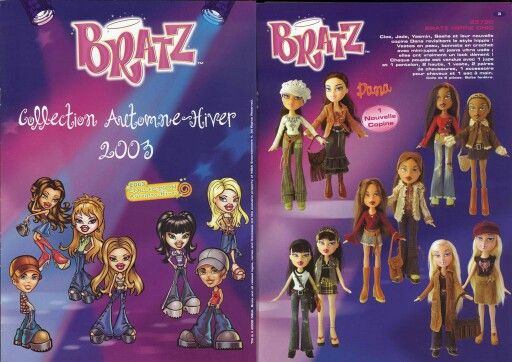
The Bratz dolls were popular, just like barbie. In 1959, Barbie made $900,000 in her first year on the market. In 2001, Bratz made $97,000,000. Adjusted for inflation, the Bratz take it (probably because dolls were more expensive in general, regardless of inflation). And take it they did. In the U.K, Barbie undersold in comparison to Bratz for 23 consecutive months, and continued to for long periods after their release. By 2005, Bratz were a $2 billion franchise with command of 40% of the doll market.
These respective popularities can perhaps be attributed to both Bratz and Barbie being perfect products of their time. They cater to the general feeling among the fashion doll consumer base in their years of release. While barbie is the star of the show and her friends make appearances from time to time, there are 4 original Bratz to choose from. While barbie became a working woman, the Bratz girls are just that, girls who go to school, shop for the latest trends, and crush on the cutest boys. Which one suits the girls of the early 2000s better?
Briana Armson (@bareezalay) said it best when she wrote for Capsule 98 –
“As well as being fashion-forward in an encouraging, experimental way, the core four was refreshingly diverse. Each doll had a markedly different skin tone and hair colour, and their racial ambiguity left room for wide-spread representation. Sasha, Yasmin, Cloe, and Jade formed a tokenless multiethnic friend group in which there was no leader. Their bobble heads, frosty makeup, and chunky shoes—in all its quintessential 2000s glory—was a reverberation of the times.”
Therein lies the linchpin. Bratz were new. While Barbie had done her best to keep up with the times, the market was saturated. The people were beginning to stir. Bratz were refreshing. They presented the alluring opposition, perhaps accidentally coming to represent everything Barbie could not. If you weren’t a bleach blonde aristo with the body of a goddess, then you were a Bratz girl. They began to peel away from Barbie to the extent that by 2005, Bratz were raking in $800 million, with Mattel trailing far behind at a meagre and despicable $445 million.
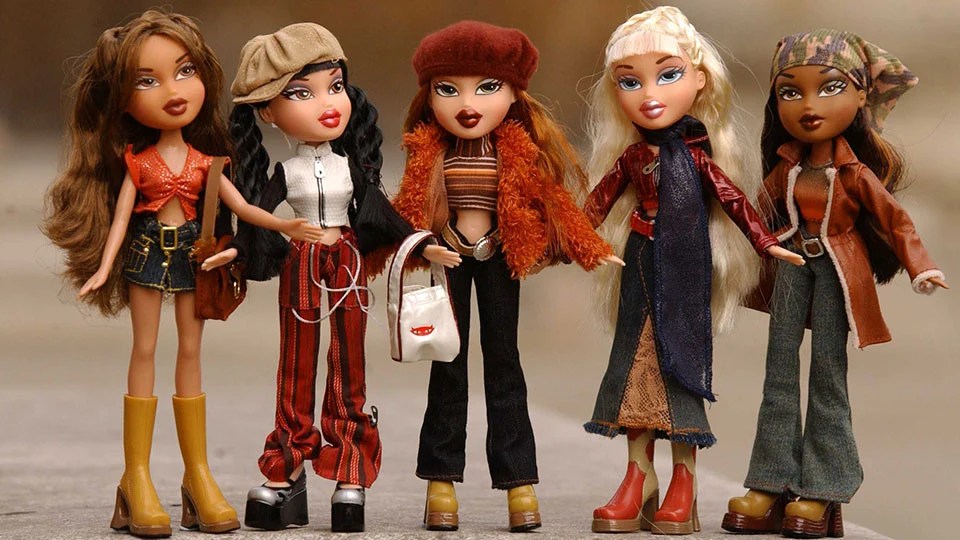
Meet the Girlies
Since their first release, a vast multitude of characters have been added to the Bratz universe. But, at the centre of it all are four girls, known as the core four. Each of them was designed to provide representation to a different race, and at the time they certainly succeeded in this goal. Judging these dolls by todays socially conscious standards is redundant, because we all still liked them. However, I’m going to do it anyway, because they probably did work to enforce racial stereotypes.
Cloe: Nicknamed Angel, Cloe is the white girl. Bryant originally described her as ‘the leader of the pack, was a bit sweeter, softer’. Hmmmmmmmmhh. This, of course, has a truck load of implications with regards to the commonly perpetrated stereotype that women of colour are in some way “harder” than white women. If we read very deeply it seems to suggest that women of colour are more quick to anger, and need to be ‘led’ by a white girl. At the end of the day it comes down to the way Bryant’s societal views had been shaped, and unfortunately, the dominant views of society at the time. That’s why subtleties such as this were completely eclipsed by the amount of representation the Bratz offered in every new release in comparison to Barbie. Still though, Cloe is the most produced Bratz doll in the entire series. With a “flirty, energetic, clumsy, and imaginative” disposition, it’s deliberately very easy to like her. She was my favourite.
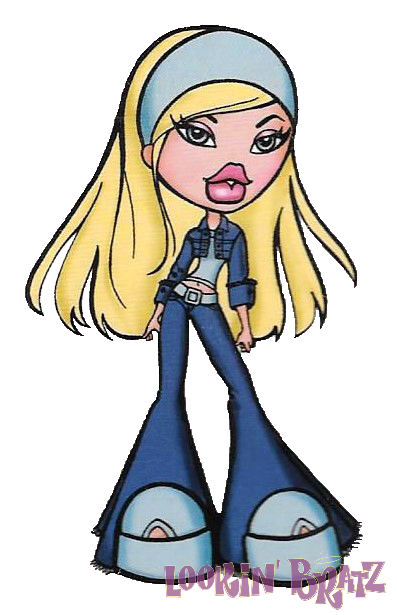
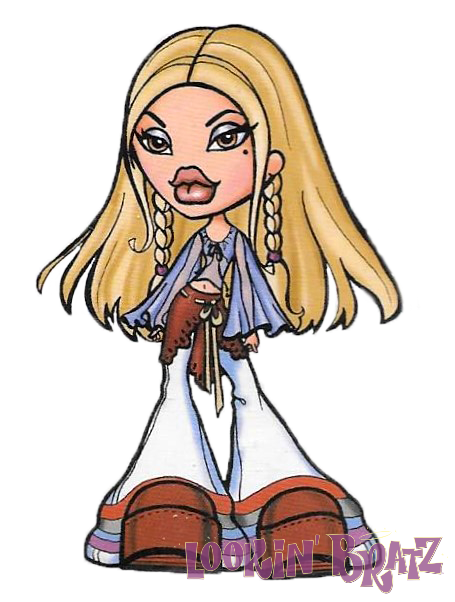
Yasmin: Originally named Lupe, Bryant designed Yasmin to be his hispanic girl. She was at first a red head, and then a blonde with lighter skin, but more came to represent Latin girls with her looks by 2003. She dyes her hair a lot, what can I say. Known as the Pretty Princess, she is glamorous and beautiful yet quiet and reserved. However, despite being better than you in almost every way, unlike Barbie, she won’t rub your nose in it. She’s ‘open-minded’ and always there for her friends and pets. Apparently, despite all this she claims to have a bohemian style and is into earth tones, which I think in this case means she wears big bags sometimes. She’s no Phoebe Buffay put it that way, but she does wear lots more patterns than the other girls tend to, and a lot more flared trousers, too. I think these two parts of her presentation are slightly opposed though. She is the second most produced girl after Cloe.
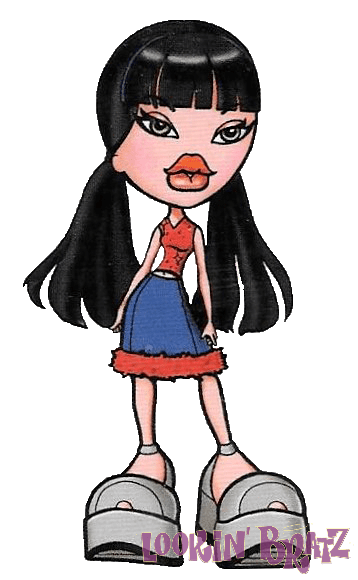
Jade: This is the Asian girl. Want to know how that affected Bryan’s original drawing? She’s taller and skinnier than the others, if that’s even possible, and has alabaster white skin. Interesting. However, Jade is less quick to fall into other stereotypes placed on Asian women, often going against fashion trends, “making her own path and doing what she wants”. She is known as Kool Kat by her friends, and a Kool Kat she is. While the other girls do have wicked senses of style, Jade takes fashion very seriously. Her outfits usually reflect this, sticking on theme with her girls but employing more colour-work and different cuts. She also usually does a lot more with her hairstyles, coming packaged with cute pigtails or space buns. In this way, Jade always has a very distinct look, while in comparison the other girls just wear cool clothes. Despite this, she is often left out of new lines, being replaced by other newer characters.
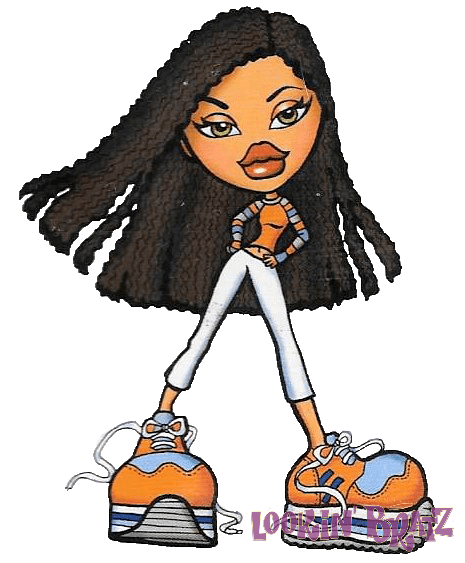
Sasha: Finally, another character often left out of lines is the African-American girl. Originally, she was named Hallidae, and is first and foremost described on the Bratz fandom wiki as ‘a sassy girl’. Great. You know what, why don’t you read Sasha’s full personality description for yourself.
“Sasha is a sassy girl, who is no fear of confrontation or situations and she is very organized; she knows who she is, what she wants, and how to get it! She has a bad temper, which often leads her into trouble. Nevertheless, Sasha cares about her friends, is always ready to stand up for them and no one would dare mess with her friends because she always has their backs! She takes the mother-role of the friend group and is often the one saving Cloe from her dramatic freak outs and breakdowns.”
I’m sure you can draw your own conclusions on that. Let’s not focus on stereotypes here though, and instead talk a little about the apparent colourism employed in Sasha’s original and promotional designs. Sasha’s skin tone often changes in marketing materials, but she is often not much darker than Yasmin. When it comes to the actual dolls however, thankfully Sasha always provides representation to African-American girls. Her skin colour does still shift, but so do the other girls’, and of course, not every African-American woman has the same skin tone. On top of all that, she has superb style, probably the best of the group in my humble opinion. And unlike Barbie, a black girl as a co-leading lady meant Bratz provided infinitely more in terms of basic Y2K representation.
The Silver Screen
It took Bratz a little longer than Barbie to start releasing films, but Barbie had a surprisingly late start to extended visual media. ‘Barbie and the Nutcracker’, the first Barbie film, was only released in 2001 as a straight-to-video movie. Three years later, Bratz first animated movie Bratz: Starrin’ & Stylin’ was released and went straight to DVD. There’s disparity in the quality of these first films, mostly due to the fact that Mattel was a multi-billion dollar conglomerate already by this time.
As the years went by though, both franchises began to pump out extra media to world-build for their dolls. Children now had a boundless wealth of movies, shorts, books, and CDs to draw upon if ever they needed extra storylines for their dolls. But, at the height of their popularity, how do the Bratz movies match up to their counterparts? Let’s meet the contenders:
Barbie Rapunzel VS Bratz: Rock Angelz
Even though these two blockbuster motion pictures don’t have much in common apart from being marketed to young girls and fundamentally changing the landscape of film forever, we’re going to compare them. This is because these are the two movies I loved most as a child, so I can review them with my child brain and get a more accurate reading.
First off, Barbie Rapunzel
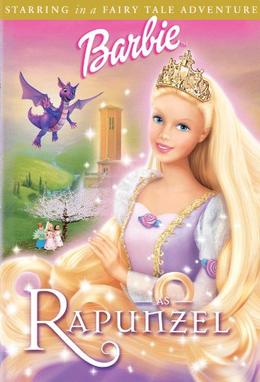
Barbie as Rapunzel is a genius combination. They both have long blonde hair and they’re both princesses. The movie is based on the Rapunzel fairytale, however it gives Barbie a lot more to do than the original story. The colours are vibrant, and the setting is perfectly detailed enough for children’s imaginations to follow and build upon. Hands down the best part of the entire movie is the scene where Barbie finds the portal (yeah, and what about it?), and is going to go to the masked ball with Prince Stefan, so she paints her dresses on with a magic paintbrush. Watch it, it’s fabulous. Even if you’ve seen it before just watch it. This scene enraptured me to no end as a child, and I was brought to tears when I just rewatched it. I still cannot quite put my finger on why it is so magical and mesmerising. The final dress is so fucking good and sparkly, and the music oh my goooodddd. Anyway, at this point the story also combines some cinderella elements which is very cool. The film has an intensely dramatic ending, but of course, Barbie saves the day and wins her kiss with the Prince. The story is paced exceptionally well, and the romance is actually incredibly written if you can look past the instant attraction trope. This film single handedly made me fall in love with Barbie.
Next up, Bratz: Rock Angelz
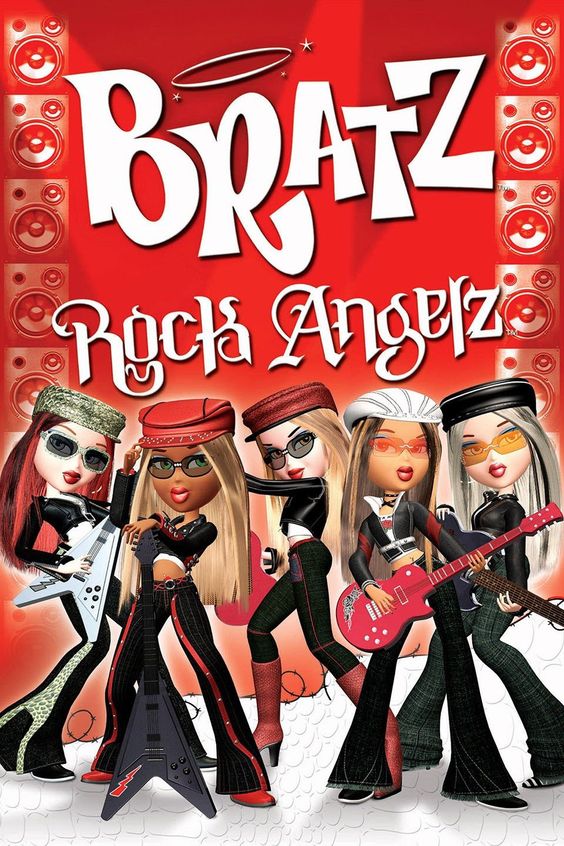
This film was released on Cartoon Network on the 4th October 2005. It was the first full-length, computer-animated Bratz film. While Barbie and the Rapunzel fairytale need no introduction, as the first major Bratz movie, this film had to do a lot in its 1 hour 13 minute runtime. Rock was a big thing in the noughties, and it’s only right that these super cool girls start an unrealistically popular rock band. This is the premise for Bratz: Rock Angelz, and right from the first scene of the girls washing their glittery red chevy cruiser, a cool girl movie this evidently is. The animation is still bad in comparison to Barbie Rapunzel, but Bratz doesn’t take itself anywhere near as seriously as Barbie Rapunzel, despite them both being children’s films. The settings are not particularly detailed but the girls are so much more relatable, the dialogue is fun, and interestingly the characters look far more like dolls than they did in the Barbie movie. Instead of being princesses, they indulge in normal everyday girl things like horoscopes and breaking mean girls’ noses. There are a few slurs in this movie, too, but what did I say? Barbie is perfect, Bratz are real, even if that reality is based in stereotypes locked in the early 2000s and is ultimately a detriment. Unlike the Barbie movie (which, to be fair, is a fantasy), rather than using magical tools, the Bratz girls actually progress their story with intelligence and shrewd moves. The best part? The song, dude. It’s so good. Literally.
Verdict
In general, the Barbie movies are better than the Bratz ones from a technical and plot standpoint. However, while Barbie films rely on popular myths and stories, the Bratz movies were often original narratives shaped around the teenage protagonists. Once again, if you wanted high fantasy then Barbie was your girl. But if you wanted goofy fun and great fashion with your best friends, the Bratz were the best choice. There’s a distinct lack of loneliness in the Bratz movies that I feel permeates a lot of Barbie’s extended media, no matter how many quirky sidekicks and acquaintances she may have. In relation to the dolls, Bratz: Rock Angelz is the perfect edgy counterpart to the girls, introducing their characters and building up their stories and backgrounds. Barbie Rapunzel, on the other hand, serves to extend the Barbie doll canon into those familiar lofty and fantastical heights. The Bratz movie characters are the dolls, but Barbie is always just going to be Barbie in a different dress.
Criticism
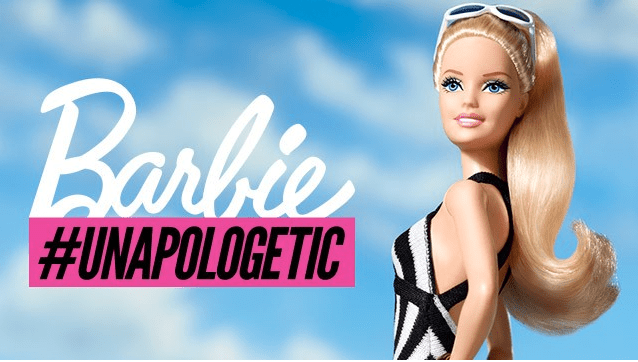
It’s not easy being a brat, and these dolls were subject to a fair amount of criticism in their time. Barbie is no different, and mayhaps people had good reason to be critical.
Bratz:
The main criticism levelled against Bratz was that they were sexualising young girls. The Bratz were 16 year olds. This worked because young girls knew that all you had to do to get cool was age. They wanted dolls of girls who were old enough to go on shopping trips, but still had responsibilities not unlike their own. However, this doesn’t change the fact that the Bratz girls do exude very mature personalities, and wear clothing that’s not exactly appropriate for the pre-teen market they were targeted toward. But the dolls were designed to be fashion forward, and this was what the fashion industry had deemed ‘in’ at the time.
As well as skimpy clothing, it was claimed that, through their marketing, the Bratz dolls encouraged children to partake in promiscuous activity. I don’t know if I can particularly argue with this one, especially since the line of dolls in question, the Bratz: Secret Date collection did see the girls coming with accessories like champagne and glasses. Underage drinking and dates with boys who shouldn’t be pursuing 16 year olds, anyone?
Barbie:
Remember the point I made the entire introduction revolve around that Barbie provides unattainable standards to children? It’s a pretty popular criticism that she’s had to deal with since she was created. To combat this, in 2016 (took you a while) Mattel released new body types for their Barbies. The Barbie Curvy doll was actually only a size 4 in terms of measurements, but due to her marketing as the bigger Barbie, children obviously regarded her as fat. A size 4 is not fat and it never will be, but that’s what parents thought their children would think. I believe this criticism is justified, but if we weren’t exposed to unrealistic body standards by Barbie as young girls, we were exposed to them by just about every other media we consumed.
In terms of diversity, Barbie allegedly only included it because of declining sales. Arguably, this began in 1968 with ‘Colored Francie’, yeesh. But the Barbie series truly started releasing dolls of different races in 1980. Until 1990, however, black barbies were still made with the white dolls’ heads as a foundation and featured no defining characteristics other than brown skin. They’re also a little racially ambiguous with regards to their hispanic dolls, however in recent years the dolls of different races do unquestionably represent women of those races. In 2007, the Barbie brand released a range of dolls from different places around the world in their native costumes – this is representation and educational for people outside those cultures, but it doesn’t do much to present those women as human beings distinct from yet capable of interacting with their culture. But did Bratz really manage to do that either? The good bit about Barbie is, if the doll gets their own box, they are Barbie. They definitively made women of a variety of races, class backgrounds, sexualities, and abilities the main character. It just took them a while.
Both:
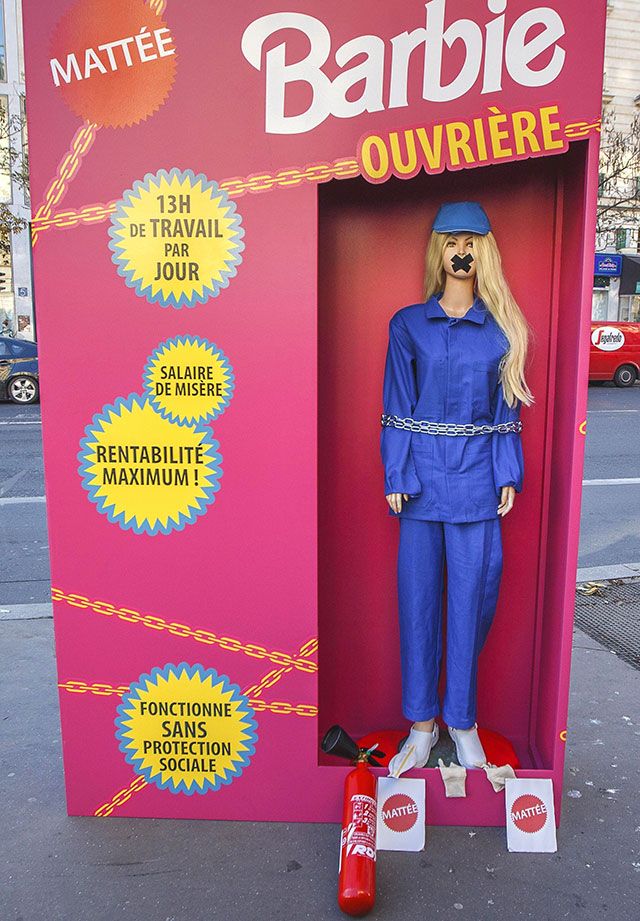
Hey, do you also remember that point I made in the introduction about Barbies being made in sweatshops? In December 1995, it was reported that any one of the 8000 workers in the two Chinese factories producing Barbies would need to work 10 hours a day for 523 years just to match the amount that Mattel spent on advertising for Barbie in one day. Well, if there’s one thing Bratz and Barbie are neck and neck on, its exploitative labour practices. In a 2006 claim by The Institute for Global Labour and Human Rights, workers in the factories who produced Bratz dolls were working 95 hour weeks, and being paid 50 cents an hour. Per doll, which retailed anywhere between $10 and $25, the cost of labour was a measly 17 cents. This is, devastatingly, a sad reality of Western businesses saving money and generating larger profits by outsourcing work to populations whose labour they deem to be less valuable. Mattel claimed they would investigate, while MGA put out a statement that reassured shocked fans that they only used the highest quality factories in ‘the orient’.
Conclusions on Criticism:
I agree with the diversity criticism, I agree with the criticisms of their physical attributes, but I don’t know if I agree wholeheartedly with the over-sexualisation theme. Yes, if those dolls were 16 year olds, then they probably shouldn’t have been wearing clothing like that. But, when Barbie was first released she was wearing a skimpy swimsuit, a fashion of the time. When Bratz were first released, they wore the fashion trends of their time, too. The fact that these clothing items were more mature than a teddy bear shirt and dungarees was to be expected. Bratz were the girls with the passion for fashion, and as much as they were real, they couldn’t shop at Gap Kid. No other little girl with a passion for fashion wanted to see that. Fashion is an industry targeted directly to adults that little girls are told they should be interested in. Bratz fashionable outfits were only sexy insofar as the clothing they were based on was sexy. Little girls were never going to find items of clothing like the Bratz girls’, because thankfully, they don’t make clothing like that for 8 year olds. Just like with Barbie’s body issues, if this bad influence and great style didn’t come from Bratz, it was going to come from just about every other media we were exposed to as young girls anyway.
Both the Bratz dolls and Barbie’s representation is obviously just a ploy to appeal to as wide a customer base as possible. But the Bratz representation was not overt enough. By not definitively stating what race the girls were, Bratz kept their market for potential racists open and flowing with cash. As Barbies go, I think she actually benefitted from not having full representation from the start, or being touted as the doll with minorities. She has thus been provided the space to come on leaps and bounds in terms of her representation and be praised for it every time, whereas in this competition for consumers, the Bratz had exhausted all their socially conscious new-millennium points in their very existence. They could not come as far as Barbie, because they were already what society then deemed diverse. Bratz limited itself with its own reluctance to avoid ambiguity, and by a rigidity in terms of original characters. Take the Barbie Role Model series for example. Something like this simply wouldn’t be possible for Bratz, because they can’t include real people in their universe like Mattel is willing to for Barbie. They may well be a tokenless multi-ethnic group, and they received due praise for it. But Barbie is consistently welcoming new and varied types of people into her fold with every release, and she will continue to do so as societal feeling dictates.
Both too definite and too ambiguous. Perhaps, Bratz were actually too much a product of their time.
The Lawsuit
The battle between Bratz and Barbie did eventually get messy, and interestingly, it was not Mattel who made the first move. At the height of Bratz’ popularity, MGA filed a lawsuit against Mattel for their range of My Scene dolls. These dolls greatly resembled Bratz, and had been released at a point when Barbie sales were rapidly declining, consumers favouring Bratz. It is pretty blatant just how much of a Bratz rip-off the My Scene line is, especially when you know that The New York Times described their features as “exaggerated lips and bulging, makeup-caked eyes.” Pretty blatant, right? Almost as if Mattel was baiting Bryant and Larian in its desire to compete.
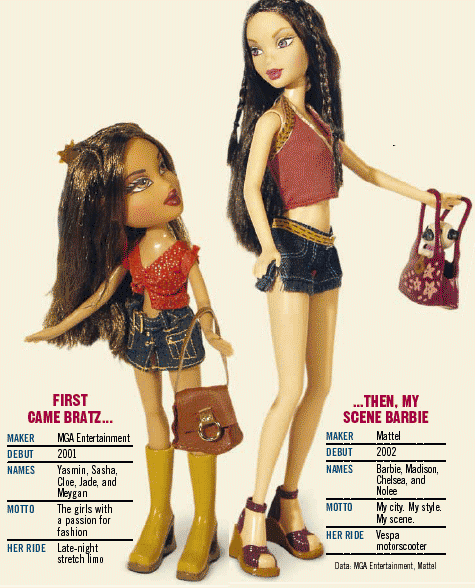
Mattel quickly struck back with a counter-lawsuit that claimed Mattel actually owned Bratz, because Bryant had come up with the idea when he was still working for Barbie. You can almost see the Mattel board of directors rubbing their devilish hands together as they’re presented with the chance to finally rip the Bratz rebellion down. And rip it down they did, with a judge ruling in favour of Mattel that MGA had ‘converted Mattel property for their own use’, to the tune of $100,000,000 in damages. This was less than Mattel wanted, but all the jury could offer was that the first iterations of Bratz dolls probably had been created when Bryant still worked for Mattel.
A range of appeals saw the Bratz brand able to continue retailing in stores across the world, and eventually the ruling that MGA would have to forfeit the rights for Bratz to Mattel was overturned. But, the damage was done. Under pressure from Mattel and their favourable ruling, the Bratz creators decided to slow down production of new lines indefinitely in 2010. The momentum disappeared, and the Bratz girls could never return to their original style and charm.
Oh, and the artist who created the bobblehead girls for Steve Madden’s advertisements did sue Bratz in 2009. He lost, with the hilarious final ruling reading “Belair cannot monopolize the abstract concept of an absurdly large-headed, long limbed, attractive, fashionable woman.” Fabulous, even if the resemblance was pretty blatant and Bernard Belair probably should have received at least some credit for the design.
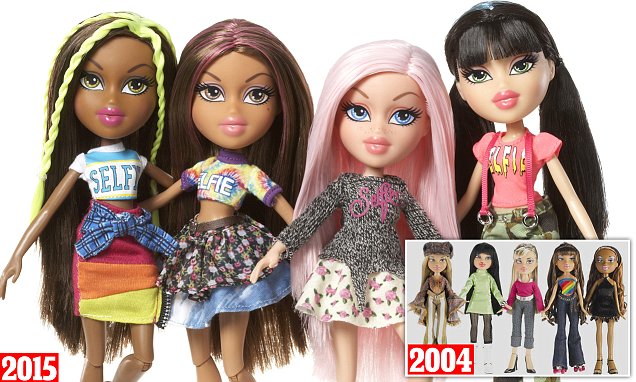
In 2013, the first changes to the Bratz dolls were made, with the girls getting slightly taller and receiving a brand overhaul. By 2014, MGA had both reversed and consolidated this decision, choosing to take Bratz ‘back to their roots’. None of this year’s series of dolls was made available in the US or Canada. In 2015, more micro-alterations to the Bratz physicality were made, and another comeback was launched. Public reception dropped to an all-time low, and long-time fans claimed that MGA had desecrated the Bratz brand by marketing to completely the wrong demographic. MGA decided to take a break from fashion dolls. They tried again in 2017, but consumers said they preferred the 2015 dolls.
Fin?
Bratz’ popularity has waned significantly, with sporadic new releases turning into a comeback collection met with a luke-warm general reception every couple of years. In 2019, Mattel rejected MGA’s newest offer of a merger, and today they still stand as bitter rivals.
But there is hope. Two decades after Bratz’ first release, they remain the apple of girls’ and women’s eyes across the world. It is impossible to make that much of a splash without leaving ripples. The online community dedicated to Bratz is still thriving and is one of the most divine places to explore. Their legacy, for many long-time fans, stands completely untarnished, and the continuing comebacks still receive a significant deal of love from both die-hard and newbie fans.
In 2013, the final year before the Bratz brand really took a dive that it has yet to recover from, the journal Psychology & Marketing surveyed 70 primary school aged girls in Israel. The girls had 6 Barbie dolls and 3 Bratz dolls each on average. The kicker though, is that only 3% of these girlies thought Barbie was the best. Eighty seven percent told the researches that Bratz was better than Barbie.
It’s stats like these that really show just how much inherent power the Bratz possessed. But, they were never allowed to realise their full potential. As usual, the biggest what-ifs come as a result of conglomerates bulldozing their smaller yet better counterparts. That amount of promise is threatening to the established order, and they will use force to defend themselves against insurrection. In the case of Bratz, they weren’t just a promising threat to Barbie. They absolutely curb stomped her year after year for the majority of the early noughties. So naturally, the Queen gathered her troops, and sought to restore balance to her queendom.
In the end, it was nothing but a fruitless exercise in vanity.
I ask once again, what happens when an icon is left to authoritarian rule for 42 years no less? Indeed, the heroes shall rise up in opposition, and if all the powers of edgy fashion and edgier personalities are behind them, they can take the throne. But these highs cannot be maintained. The rebels shall suffer their downfall, burning out under the judging hand of the Gods. The scorned ruler will return to the throne once more.
Alas, these dreams can never last, and the world must return to what it knows.
Blissfully pink oppression.
Epilogue
I wish I could find my Bratz dolls, but I fear they went in the rubbish a very long time ago. I had a Cloe that I specifically yearn for. She was wearing a union jack t-shirt and flared jeans. And my god, the head of hair this girl had. It had a red stripe in it, but only when you put it in water??? I might just be making that up, but it was so thick and luscious. Never have I known a doll to have that much hair. She was absolutely my favourite. And all the drawings I used to have? They were so cool, they really made me want to be a fashion designer. I also had the Bratz tour bus which was quite possibly my coolest toy ever. It was so big that to get it back home from the toy store my mother took my 3 year old sister out of the pram, and pushed the Bratz bus up the hill in it instead. And, I had an unofficial Bratz game for the Nintendo DS which I played until the cartridge was scalding, and then I tried to turn it in at GAME for the cash-back and got called out for purchasing an illegal property. I was 8, but what’re you gonna do?
Overall, I’m a Bratz girl through and through, I always have been and still am. Those Bratz lines that were released from 2003 onwards dominated my doll collection. I can appreciate Barbie and all that she has finally decided to do for representation, but she’ll never be as cool as the Bratz girls. Barbie is every woman, but the Bratz girls were real girls. What little time they ruled for they used well, and I’m glad I got to grow up with those puffy-lipped, sultry-eyed, bobble-headed teenagers. I can almost guarantee that every other Bratz girl is too.
Sources:
https://bratz.fandom.com/wiki/Carter_Bryant
https://www.wmagazine.com/culture/bratz-dolls-anniversary-deep-dive-history
https://www.history.com/news/barbie-through-the-ages
https://www.dailyedge.ie/bratz-better-than-barbies-3456293-Jun2017/
https://en.wikipedia.org/wiki/Barbie#Controversies
https://en.wikipedia.org/wiki/Bratz#Controversies

