
AN: This was a piece I wrote in my nature writing class. Enjoy!
It’s a hard life being a cabbage.
They can’t talk like fungi, they can’t grow tall like trees. Cabbages, like humans, spend their whole lives clutched around their own heart. Layers and layers of thick blanket, withstanding frost and drought, only to be ripped callously from their beds at the prime of their life. Chopped up, boiled down, and shit out. Most commonly by the eldest members of humankind or anyone who’s recently Google searched vintage crash diets. In essence, that’s a cabbage.
The Romans saw beauty in cabbages though, coaxing their genetics to become the decorative blooms of any apothecary garden worth its weight in herbs. They’re a “great” cure for baldness, did you know? But in opening the eyes of the world to the flowering cabbage, stolen away from them was their purpose to feed. Next to carrots, cauliflower, chard and chives, the humble cabbage simply cannot tantalise the tastebuds. Though, we mustn’t forget, it was humans who invented that purpose in the first place; gave the cabbage its value and then told it it didn’t have any beyond giving Mildred and Giles something to argue about in the greenhouse.
What a confusing, existential nightmare it must be to live and die as a cabbage.
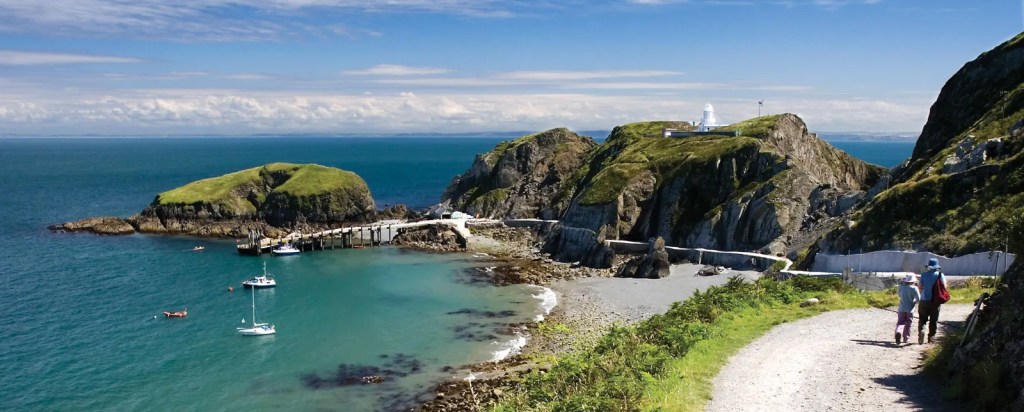
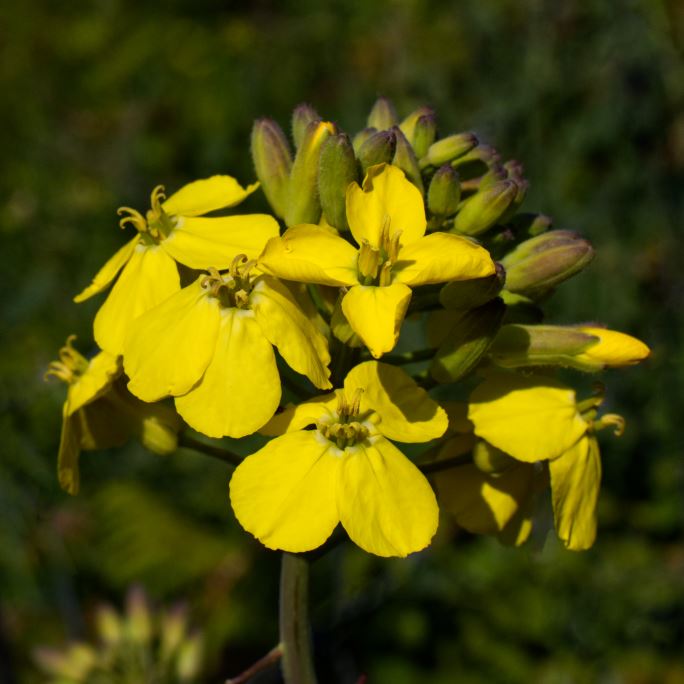
For the Lundy Cabbage (Coincya wrightii), on the other hand, life could be a dream. Found only on the island of Lundy, in the convergence of the Bristol Channel and Atlantic Ocean, this particular biennial is a sought after starlet. To see her special step-sisters she must travel to North Africa, but the loneliness doesn’t sway her. In her cabbage queendom she remains, far away from the violent forces of frost, far away from prying pruners. And wouldn’t you? She is one of a kind, given copious amounts of attention as befits such a unique being, pandered to endlessly, and the humans are so desperate to keep her going it’s only the goats, sheep, and ponies who so carelessly rip her limb from limb. Easy life, as my Gamps would say, or as close to one as a cabbage can get.
But the Lundy cabbage is a hard worker. If you gathered up all the known Lundys on the earth and put them side by side, they would barely fill a 100m2 plot. But in that square you would also find the Bronze Lundy Cabbage Flea Beetle (Psylliodes luridipennis) and the Lundy Cabbage Weevil (Ceutorhynchus contractus pallipes), insects just as rare as their host, relying on her gentle curls and soft flesh. She provides them home, shelter, sustenance. Entire populations survive only at her gentle bosom, and from her you shall hear no complaint. The resilience of mutualism, one maintained since the dark ages.
She has watched rough bearded brutes land on the granite, sat in the bowl of their stew next to the remains of puffins. She has seen De Mariscos commandeer her colonies as their own, watched them leave on their boats and come back in coffins. She has sat in the bellies of emaciated pirates and marauders, some of her has no doubt even graced the ocean in their ships, though never in big enough batches to survive the arduous journeys ‘externally’. She has saluted King Charles I, spat at smugglers, seen Heaven rise and fall, and shared sorrow with other lonely women dragged to the island by their outcasted husbands. The Lundy Cabbage has fed historians, sat by their side as they brushed off and bragged about Iron Age settlements on the isle. If only they’d asked her. But now, her starring role is as the naturalist’s dream, The National Trust simply cannot get enough of her.
In her recent battle with the rhododendron, the gracious intervention of these humans was what saved the Lundy Cabbage from complete ruin. They hacked and sprayed and cleared the bloody invasion, a far cry from their ravenous desires for her only decades prior. How could she ever thank them for allowing her to flourish again?
Or, a more pertinent question, if humans are the ultimate creators and destroyers of the cabbage, why has she come to capture our attentions so? The Lundy Cabbage, is it her uniqueness that draws us in? Our desire to have her outlast those oh-so-common cabbages on the mainland? Our lust to breed her until she grows fat enough to eat once again? Our fear that we may lose her? Still, the Lundy Cabbage cannot help but think, if her yellow flowers began to smother the grass and weeds and blooms, if her tendrils dug into the rocks and shook them in their standing, if her inhabitants carried death in their DNA, would she be next? Would she share a grave with the rhododendrons?
Admittedly, it is only a select number of people that place any value on the Lundy Cabbage. Most people don’t even know it exists, don’t even know the island exists. And yet, there is something so minuscule and admirable about the fact that we put effort into keeping it alive and thriving, just like we put effort into keeping regular cabbages alive. Poly-tunnels and soil analyses, all to get those beautiful flowing leaves, thick white veins, chartreuse skin. A gorgeous cabbage is an expensive cabbage, after all. But that doesn’t make the existence less taxing. They’re born, their umbilical chord to mother nature is severed, they’re sold, and then they’re eaten. But do humans lessen the cabbage’s burden if we invented that burden in the first place? Would the cabbage be cold and long dead if humans had never given it a purpose?
Who knows? Certainly not the fucking cabbages, that’s for sure.
 ELLE VA