
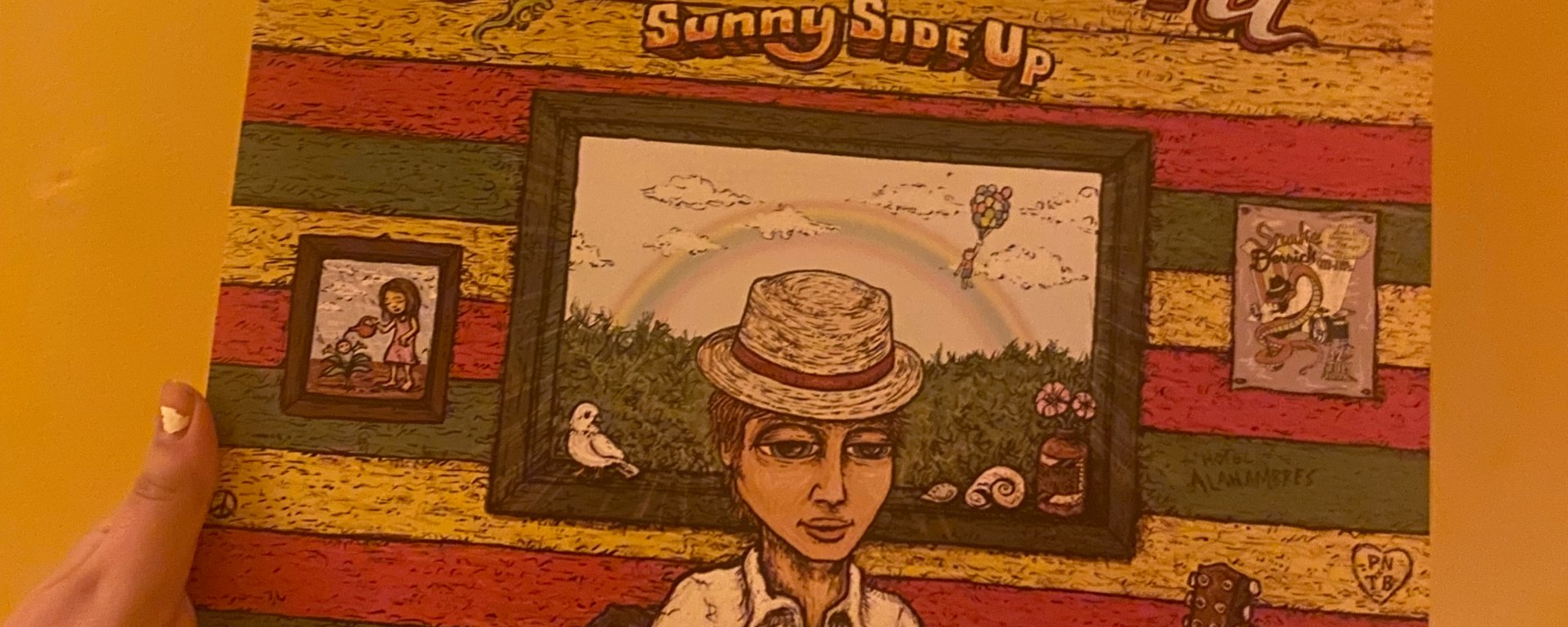
Before the slippery slope of search for meaning and the inevitable slide into suicidal ideation, there is Sunny Side Up.
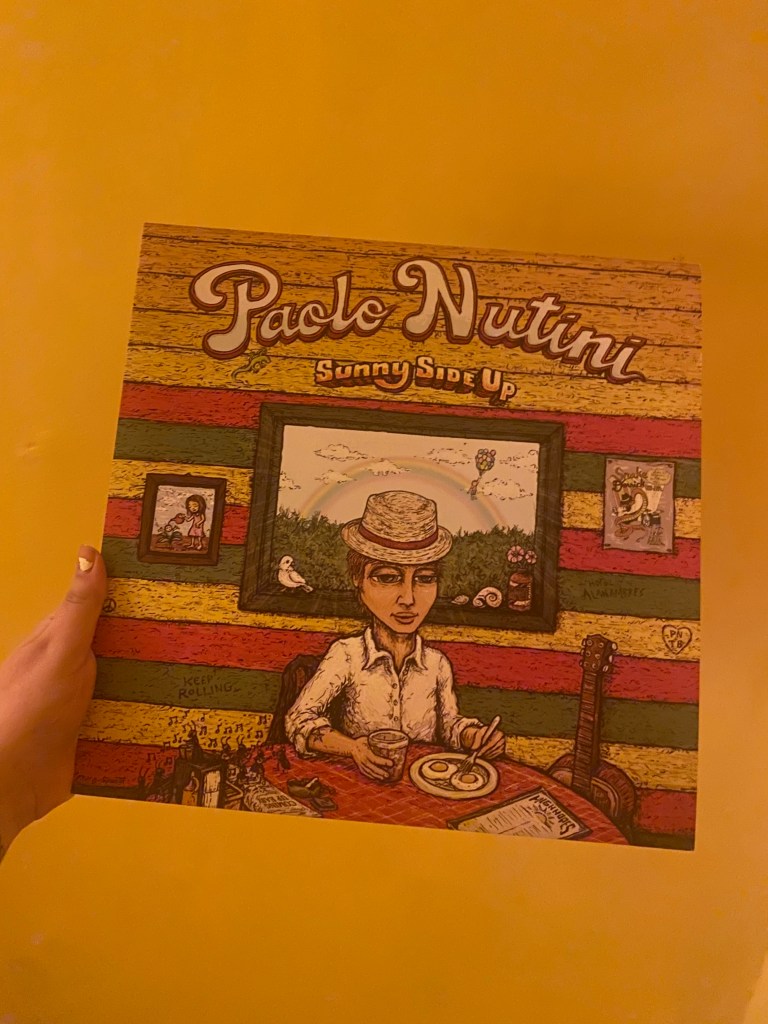
Paisley singer Paolo Nutini’s second album, Sunny Side Up, was released on the 1st of June 2009. Critics were unfavourable, attempting to squeeze the CD into predefined genres and finding none of them quite fit the hyperactive acoustic. For normal people, however, Sunny Side Up captured its audience in joyful bursts of trumpet, perfectly parallel to wisdom and lyrical lament that went far beyond Nutini’s 22 years.
That’s one of the first things you’ll notice about Paolo Nutini. Everything about him feels indescribably vintage. Like a cross between an ancient god and a pleasure cruise entertainer. He’s a puzzle that doesn’t quite seem to fit together – you have to force the cardboard edges in, but it doesn’t ruin the picture. He is undeniably reclusive, as great artists often are, most recently having taken an 8 year break from releasing music, and yet each of his songs casts heavenly light on a heartache you were never able to decipher. That crunching voice would feel more at home in a 60s smoking room, yet it belongs to some lanky Scottish feller that, in music journalist Mike Usinger’s words, sounds like a ‘mellow version of groundskeeper Willie’.
Mellow is a pretty good description for most of the music that Nutini releases. The Sunny Side Up demos play like the kind of thing he’d improvise for you if you were sat in his front room chaining L&Bs after a heavy night. The best way to listen to the finished album though, is in the car at sunrise. The benign beauty of the event coupled with the mundane of modern life is the perfect accompaniment to songs that don’t take anything for granted, glorifying existence and life and kindness and love and family and hope. Plus, you can sing as loud as you want.
Alright, let’s get into it. If you are going to listen to it, go from beginning to end – don’t pick out the popular ones. This is one of those rare albums where it’s a crime to do anything but drop the needle and let it spin.
10/10 enters the room in a brown velvet suit, fitting feel good to a tee. The next two tracks, Coming Up Easy and Growing Up Beside You, are a little more chilled out, probably leaning on the buffet table with a wine cooler talking about how they used to play pooh sticks together after school. Unfortunately, you can’t have mellow without melancholy, but it’s ok because Nutini is a master. Here the album takes a turn into the minor key with Candy, Tricks of the Trade, and No Other Way. But while those three are moping in the corner, their menage-a-trois of misery is splashed with colour by Pencil Full of Lead. If we may deign to employ stereotype, High Hopes and Funky Cigarette are out the back rolling a doob, while Simple Things, Worried Man, and Smokey Joe’s Cafe are trying to remember whether they can line-dance. The stragglers, Chamber Music and Keep Rolling, those are the cleaners at the end of the party, mopping up the fun and putting it to bed with a sweet kiss on the forehead.
There’s a lot to be said for the psychology of ‘sad’ songs. When we’re coping with loss or empathising with others, our brain releases prolactin and oxytocin. When we listen to songs that evoke these emotions within us, the same chemicals flood our brain, calming us down and supporting us with shared experience. I’ve never wanted to revel in my sadness though. When I’m sad, I’m always desperately clawing for some semblance of serotonin. Sunny Side Up was happy music to me. When I hear the lyric ‘it was in love I was created and in love is how I hope I die’ I’m swaddled in nostalgia for a time that was actually fundamentally content – the last time I was content. I took the long way round, but now, in the year of our lord 2022, I’ve returned to Nutini’s front room because I’ve been lucky enough to find the happiness that I gave away back then
However, the more I listen to this album, the more I realise that almost every emotion is covered and condensed into single lines and fleeting chords. Perhaps I took it for granted that it was both the major and minor key that taught me how to see the world with optimism, with hope. Perhaps it was the embrace of heartbreak and futility that gave me a lasting appreciation for the fact that things can never go wrong if everything is alright. I don’t need fight songs or crying songs, I have Sunny Side Up – teacher, mother, secret lover. What more could you want?
 ELLE VA